Policy Regula2026-09-30 15:23:06BMO analysts say cooler-than-expected inflation revisions eased urgency for an October rate hikeAnalysts at the Bank of Montreal said revised U.S. inflation data came in softer than expected, offering some relief on expectations for another Federal Reserve rate increase in October. In a research note cited by BlockBeats on Sept. 30, the analysts pointed to the Bureau of Economic Analysis’ annual benchmark revisions, which showed a larger-than-expected downward adjustment in the Fed’s preferred inflation gauge, even though inflation remains well above the central bank’s 2% target. They also said August core PCE, or the Personal Consumption Expenditures price index excluding volatile items, rose less than expected. The year-over-year increase slowed to 3%, below the market consensus of 3.3% and the Federal Reserve’s own 3.2% estimate. At the same time, the note said the U.S. economy is still expanding and private-sector hiring remains steady. Taken together, the analysts said, those factors have reduced the urgency of another rate hike in October to some extent.80
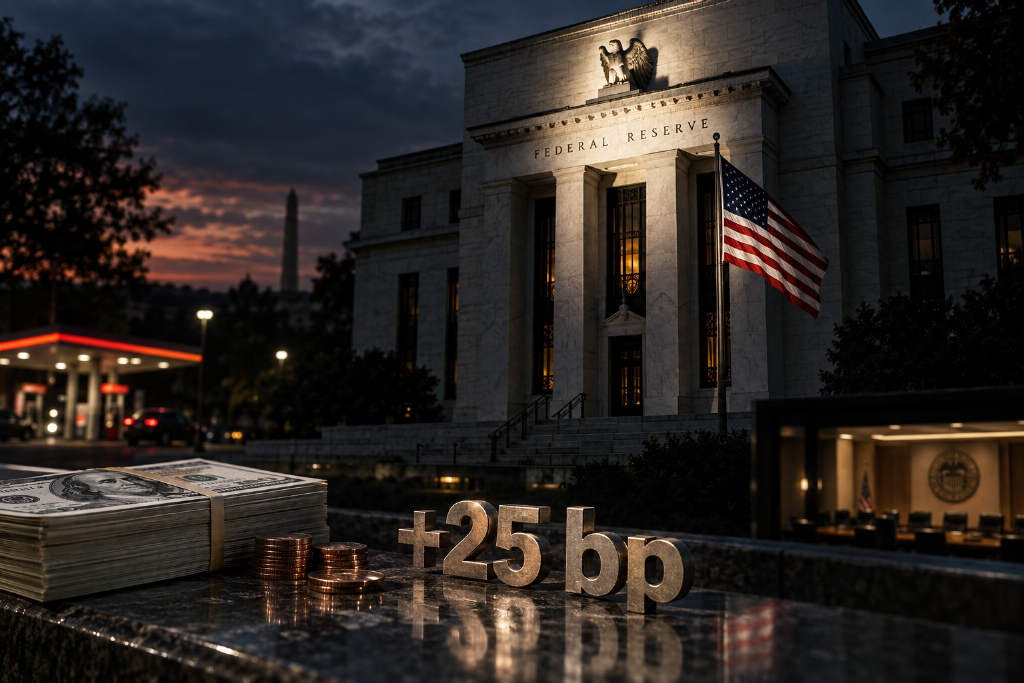
US inflation2026-09-28 06:13:07Sticky U.S. Core Inflation Keeps Pressure on the FOMCU.S. headline prices may have cooled sharply, but core inflation remained near 3.3% through the summer, keeping pressure on the Federal Reserve’s policy path. Data cited by Techub show that core personal consumption expenditures, or core PCE, has stayed above the Fed’s 2% target for 65 straight months. That persistence is being read as a sign that inflation pressure is broader than energy alone. The report said the Federal Open Market Committee, led by Kevin Warsh, raised interest rates by 25 basis points on Sept. 16. It also cited analysis arguing that entrenched inflation usually requires a longer tightening cycle rather than a one-off move. Macro strategist Jim Bianco said the market may be paying too much attention to oil prices while missing wider inflation across the economy. If inflation continues to force the Fed’s hand, the stock rally built on expectations of easier monetary policy could face a tougher test.260
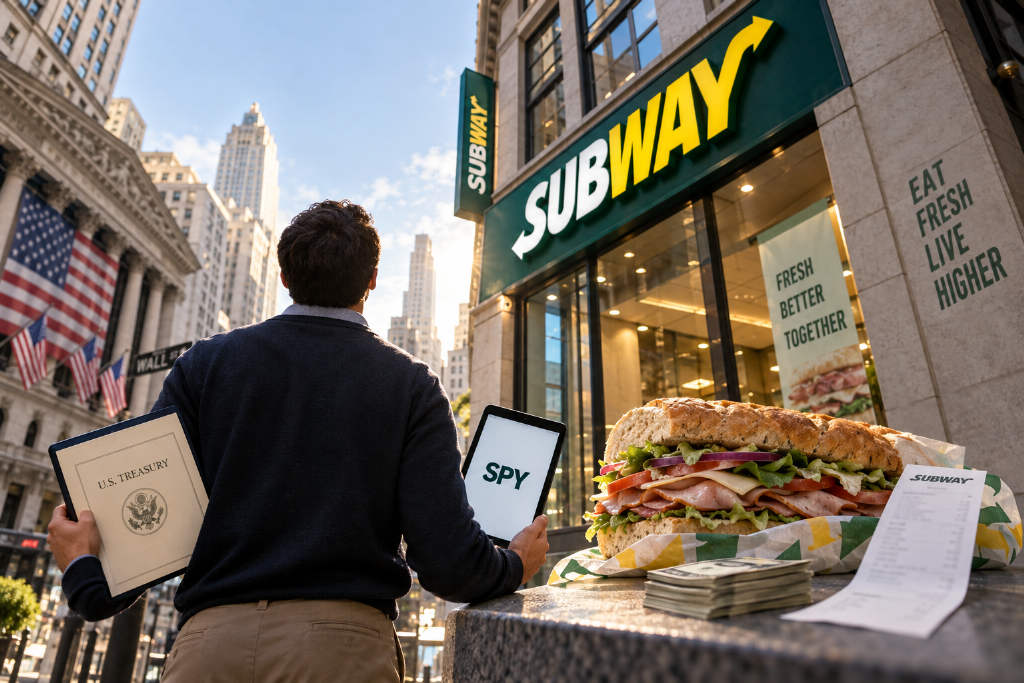
Serenity2026-09-25 14:29:48Serenity says Treasury yields lag everyday inflation, points to SPY as a hedgeOdaily reported that Serenity, known by some market participants as the “white-haired stock god,” argued in a post on X that investors should not focus only on 5% yields on 10-year or 30-year U.S. Treasuries. To make the point, he cited the price of a Subway sandwich, saying it had risen over 12 years from about $5 to roughly $20 after tax, which he described as equivalent to an average annual increase of about 12%. Based on that comparison, Serenity said investors looking to hedge inflation tied to daily living costs should consider stock exposure instead of relying only on Treasury income. He specifically pointed to the SPDR S&P 500 ETF Trust, traded under the ticker SPY, as an example of the kind of equity asset that could be used to address that type of inflation pressure.240
US inflation2026-09-12 05:49:58CICC says August U.S. inflation may put a September Fed rate hike back on the tableU.S. inflation picked up again in August, according to a research note from China International Capital Corporation, or CICC, cited by BlockBeats on Sept. 12. The note said headline CPI rose 0.4% month over month, while core CPI increased 0.3% from a month earlier. Core CPI also climbed 2.4% year over year, slightly above market expectations. CICC said the August inflation print has reached the threshold for the Federal Reserve to resume rate hikes. It expects the Fed could raise rates by 25 basis points at its Sept. 16 policy meeting, lifting the federal funds target range to 3.75% to 4%. In CICC’s view, higher energy prices and continued resilience in services prices remained key drivers of inflation, while some AI-related price pressures had also begun to emerge. The firm added that the Fed may lower its unemployment-rate forecast, raise its inflation forecast, and push up its projected rate path for 2027 and 2028, sending a more hawkish signal. CICC also warned that the bigger risk is that the Fed could deliver additional hikes later this year or next year, leaving room for markets to reprice expectations for an easing cycle.840
Federal Reser2026-09-11 11:36:04CME FedWatch shows 69.4% odds of a 25-basis-point Fed hike ahead of U.S. August CPI releaseWith the U.S. August CPI report due in about one hour, markets are closely watching the data for clues on the Federal Reserve’s September decision. According to CME FedWatch, traders currently assign a 69.4% probability to a 25-basis-point rate hike this month, while the odds of no change stand at 30.6%. The next Fed rate decision is scheduled for Sept. 16, or 2:00 a.m. Beijing time on Sept. 17. The U.S. Labor Department is set to release the August CPI report at 20:30 Beijing time. Market expectations point to headline CPI rising 0.4% month over month and 3.4% year over year. Core CPI is expected to increase 0.2% month over month and 2.4% year over year. The core monthly reading is drawing particular attention because it could shape pricing around the Fed’s next move. BlockBeats noted that the data may determine whether the Fed begins its first rate-hike move in more than three years. The central bank last raised rates on July 26, 2023, when it lifted the federal funds target range by 25 basis points to 5.25%-5.50%.790
Federal Reser2026-09-10 12:56:22Fed September rate-hike odds rise to 70% after PPI dataMarkets increased their bets on a Federal Reserve rate hike at next week’s meeting after the release of the first major inflation report of the week, according to Odaily. The report showed that U.S. producer prices rose 5.4% over the 12 months through August. Before the data was released, markets had priced in roughly a 65% chance that the Fed would raise rates by 25 basis points at its Sept. 15-16 meeting. Based on pricing in Chicago Mercantile Exchange (CME) federal funds futures contracts, that probability has now climbed to about 70%. The move indicates that traders adjusted rate expectations immediately after the PPI report. The figures cited in the report refer specifically to market-implied odds from futures pricing and the annual increase in producer prices through August.800
US inflation2026-09-07 05:21:12Inflation data, Treasury auctions and higher oil prices put pressure on tech stocksU.S. and Canadian markets are closed for Labor Day, but the macro setup was already reset before the holiday. A stronger-than-expected August nonfarm payrolls report pushed traders to raise their bets on a September Federal Reserve rate hike, while rising oil prices added to inflation concerns. U.S. equities finished lower on Friday, with the Dow, S&P 500 and Nasdaq all ending in the red. This week, the market is focused on whether producer and consumer inflation data will confirm that energy costs are spilling into the broader economy. Oil is back at the center of the story after weekend tensions in the Middle East escalated and OPEC+ left October output unchanged. Brent moved near $93 and WTI traded around $92.4 in early trading, while Morgan Stanley lifted its fourth-quarter target to $100. At the same time, the 10-year U.S. Treasury yield is hovering near 4.79%, close to the 5% level that many investors see as a serious valuation headwind for equities. The Treasury’s expanded buyback plan and a series of bond auctions this week are expected to test demand for long-duration debt. Under the surface, the tape is split. Mega-cap tech names broadly retreated, but AI hardware, memory and semiconductor equipment stocks advanced. Nvidia, Micron and several chip-equipment makers outperformed, while Tesla and Apple came under pressure ahead of key product and regulatory developments. Investors are also watching Apple’s upcoming launch event, the ECB decision, U.S. PPI and CPI, and several major listings and policy meetings on the calendar.1270
US inflation2026-08-27 04:54:09Hotter U.S. PCE revives rate-hike bets as Nvidia earnings steady the AI tradeU.S. markets turned cautious after July personal consumption expenditures data came in hotter than expected, pushing traders to lift bets on additional Federal Reserve tightening. The report showed headline PCE rising 3.7% year over year and 0.2% month over month, while core PCE stayed at 3.3% annually and 0.2% monthly. Treasury yields moved higher across the curve, with the 10-year near 4.66%, the 2-year around 4.22%, and the dollar index climbing to roughly 99.15. Gold fell under pressure from a firmer dollar and higher rate expectations, while oil traded weaker as rhetoric around Iran kept geopolitical risk in focus. Another inflation thread is building in food markets. Attacks on Black Sea ports cut Ukraine’s August grain shipments to about 20% of potential capacity, wheat futures on CBOT touched their highest level in nearly three years, and fertilizer supply disruptions tied to Hormuz added to cost pressure. HSBC warned that the 2026/27 global grain market could post its first supply-demand gap since 2020/21 and the largest shortage since 2006/07, while JPMorgan said global food inflation could rise from 2.8% in the first half of 2026 to 5% in the first half of 2027. After the bell, Nvidia delivered the day’s biggest market jolt. The chipmaker reported $96.2 billion in Q2 revenue and $89.0 billion from data center sales, both well ahead of expectations, and guided for about 70% revenue growth in fiscal 2028. The results helped revive AI spending sentiment and lifted software, storage, optical networking, and cybersecurity names in after-hours trading.1350